Roof replacement in Mundelein, IL
We take the old roof off down to the wood, fix the deck, and build the new roof up layer by layer: drip edge, ice barrier, underlayment, starter, shingles and ridge vent.
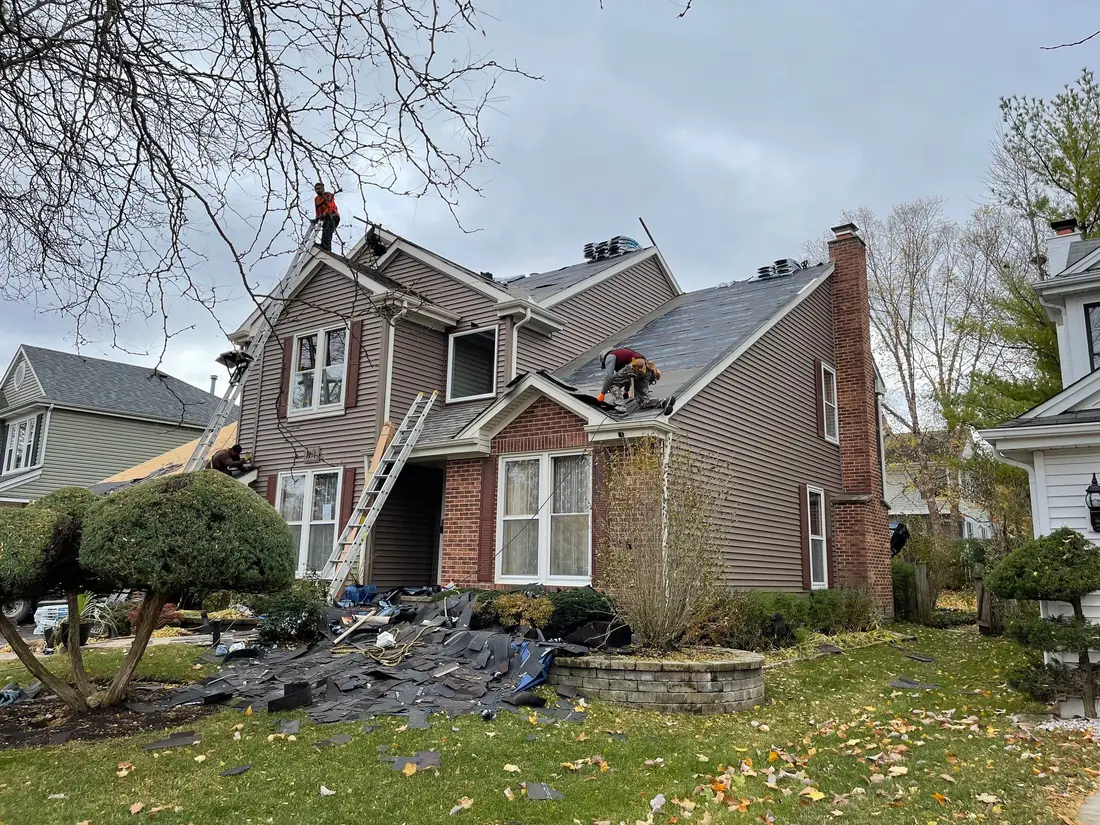
When a roof needs replacing
A roof is usually ready for replacement when the shingles have worn out across several slopes, not in one spot. Look for granules collecting in the gutters, tabs that curl or crack, bare patches where the asphalt shows, and leaks that come back after a repair. Hail damage on most faces of the roof also points to a replacement.
If only one area leaks, such as a chimney or a plumbing vent, a roof repair is often enough. The inspection tells you which it is.
Tear-off day
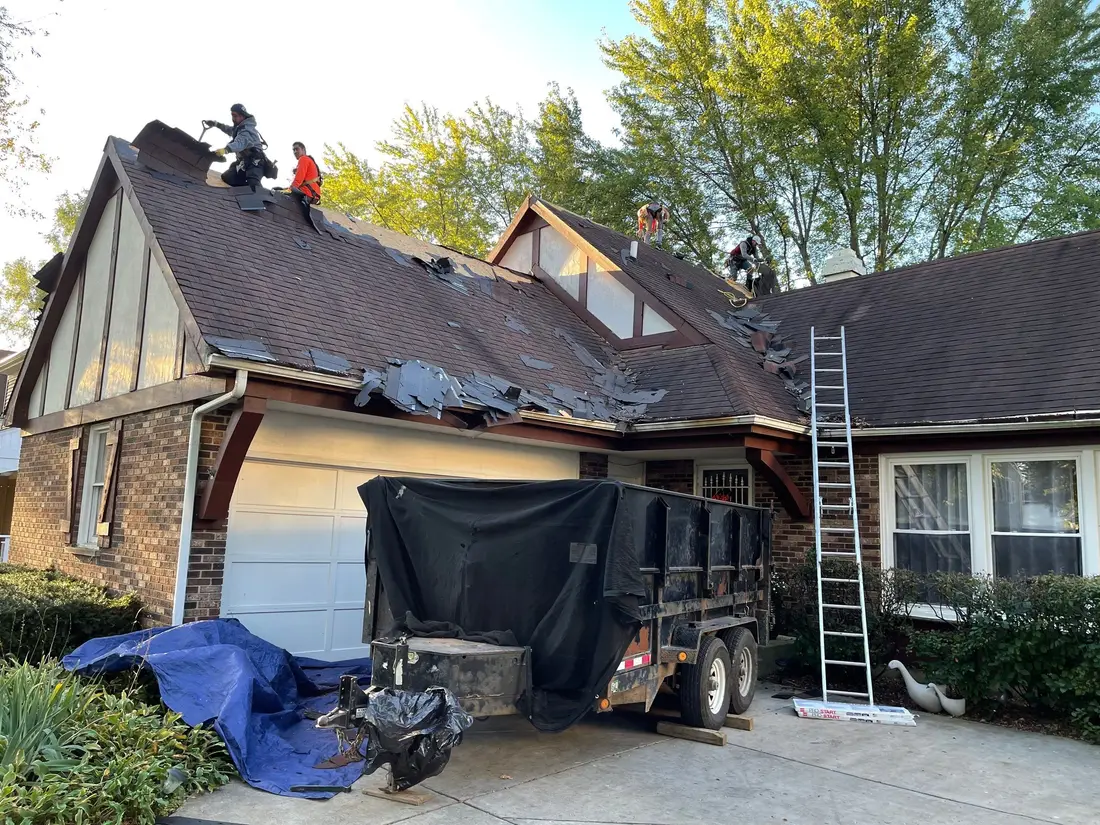
Tarps go over the plants and the driveway, and a dump trailer parks as close to the house as it can. The crew strips the shingles, felt and old flashing down to the deck and drops them straight into the trailer or onto the tarps.
The deck
With the roof off, the crew walks the whole deck. Sheets that are soft, rotten or delaminated are cut out and replaced. Plank decks on older houses get extra sheathing where the gaps between boards are too wide to hold a nail.
Drip edge, ice barrier and underlayment
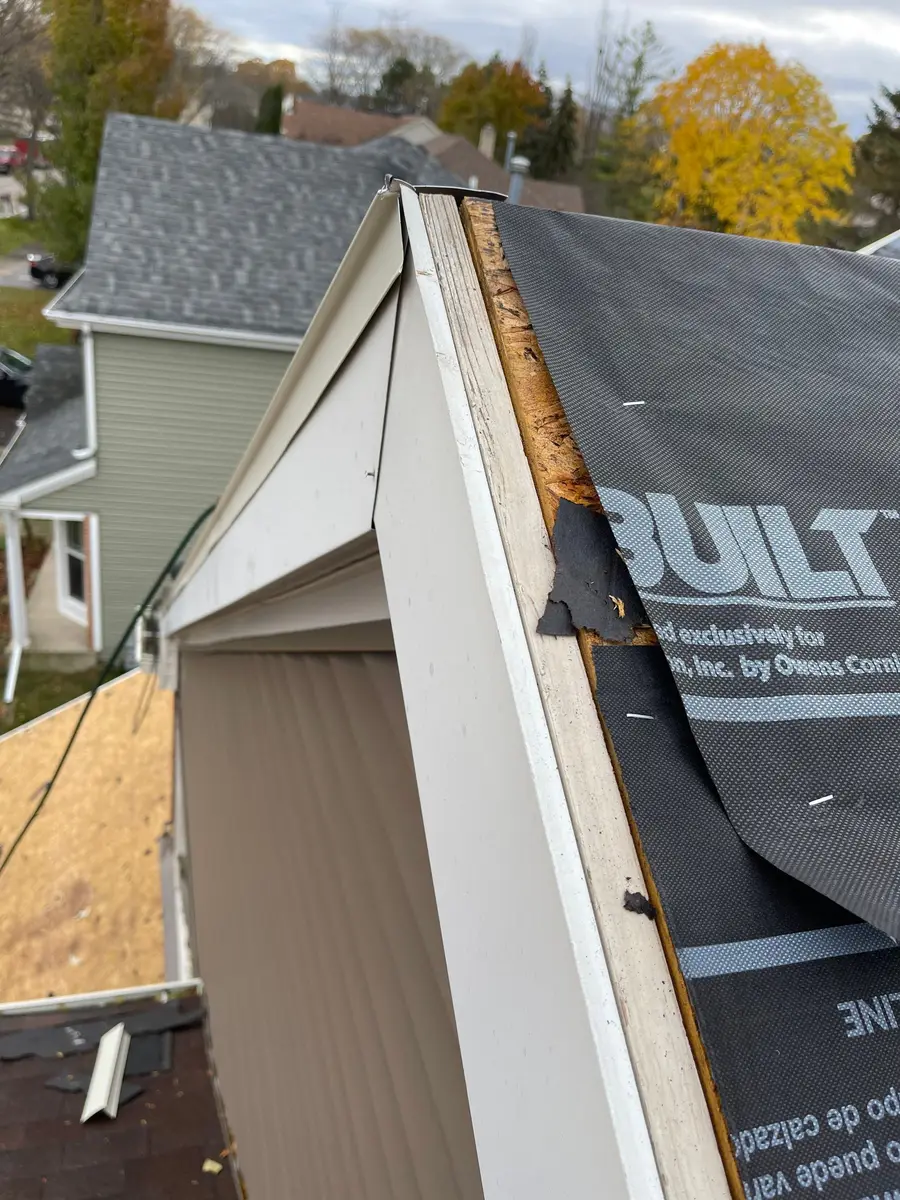
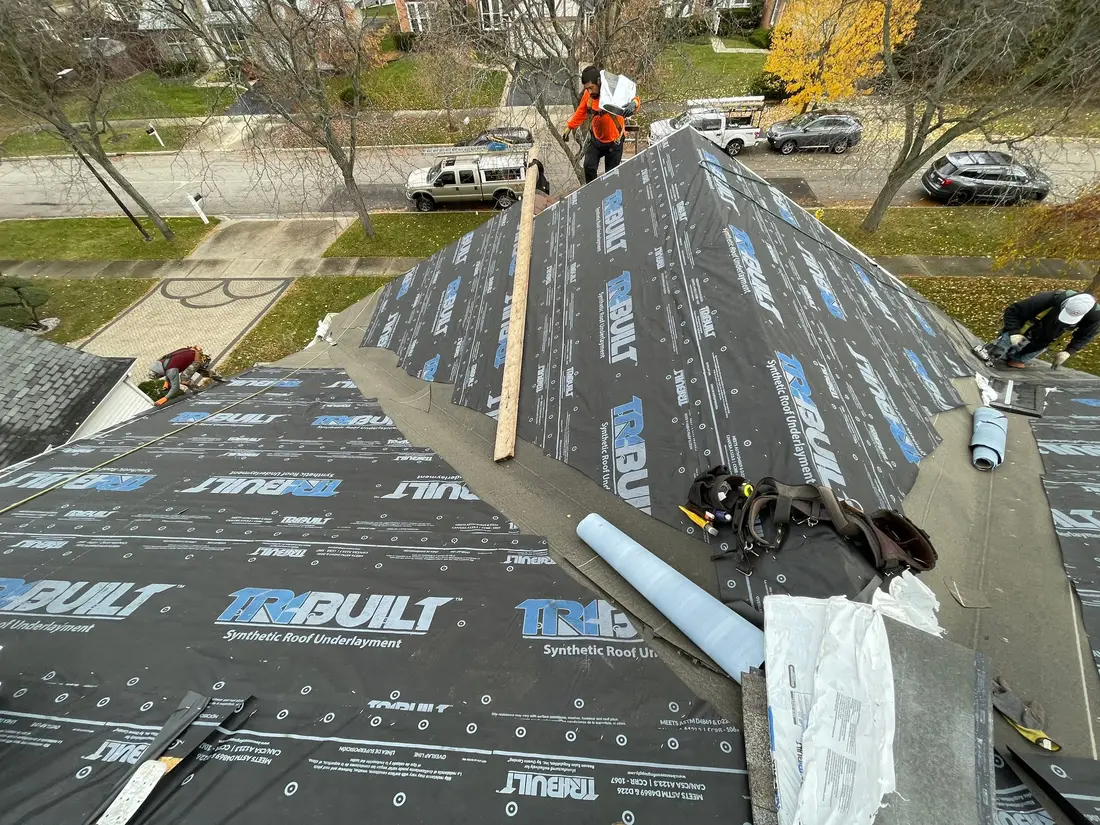
Metal drip edge goes on along the eaves. A self-adhering ice and water barrier is laid from the eave up to at least 24 inches past the inside of the exterior wall, and down every valley. That is the area where ice dams back water up under the shingles in a Lake County winter. The rest of the deck is covered with synthetic underlayment.
Shingles, flashing and ventilation
A starter strip goes along the eaves and rakes, then the architectural shingles, nailed to the manufacturer’s pattern. Walls and chimneys get new step flashing. Pipe boots and box vents are replaced, and a ridge vent is cut in where the attic has intake vents at the soffits to pair with it.
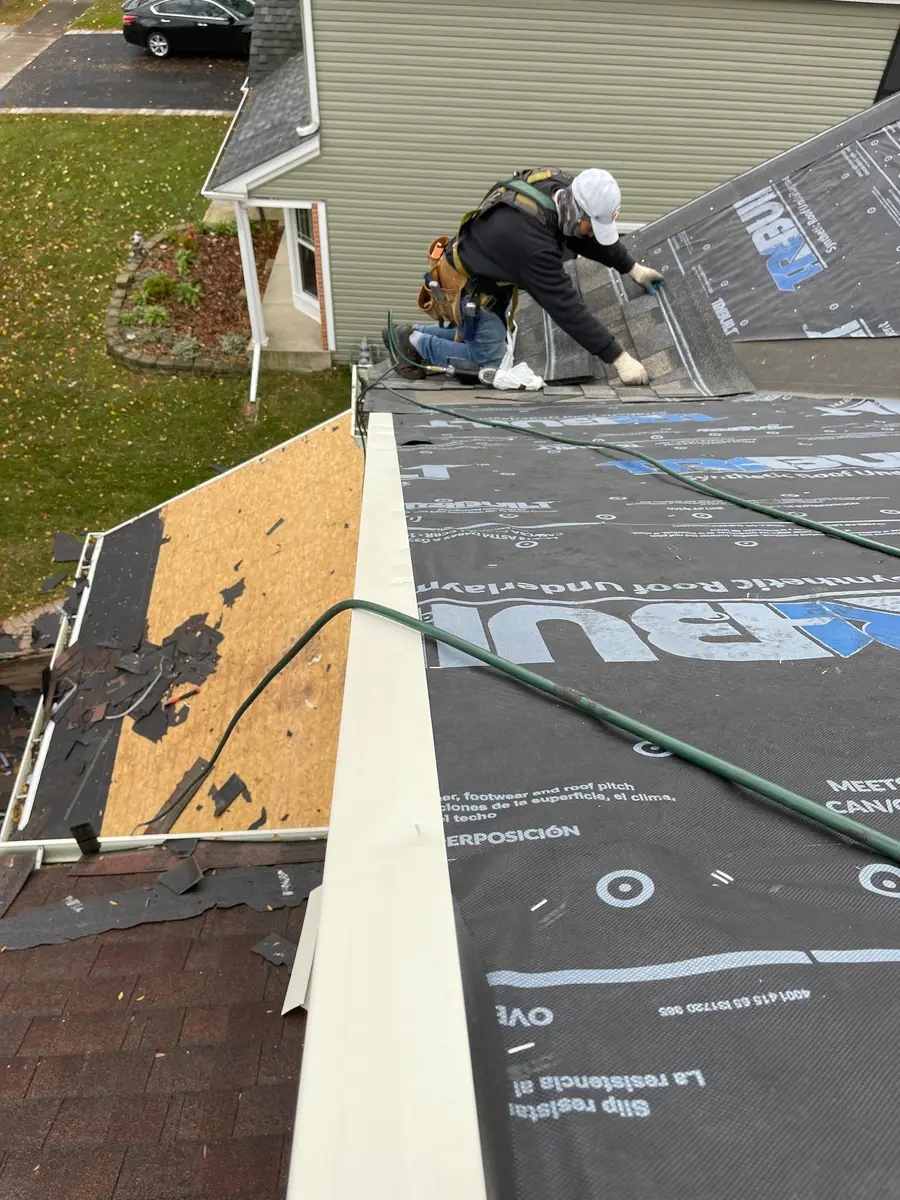
Clean-up and the final walk
The yard, beds and driveway are cleared and swept with a magnet for nails. You get the photos taken during the job, including the deck and the underlayment that are now hidden under the shingles.
Choosing a roofing material
Asphalt shingles cover most houses in Lake County. The others come up on older, custom and low-slope roofs.
| Material | Where you see it | What it is | Good to know |
|---|---|---|---|
| Architectural asphalt shingles | The most common roof on Lake County houses | Laminated, two layers thick; many colors | How long they last depends on attic ventilation, sun exposure and how they were nailed |
| Cedar shakes | Older and custom homes | Natural wood; weathers to gray | Needs cleaning and periodic repair; moss grows on shaded roofs |
| Synthetic slate or shake | Owners who want the look without the weight | Polymer panels shaped like slate or shake | Lighter than real slate; goes on a standard deck |
| Standing seam metal | Low-slope porches, additions, some full roofs | Steel or aluminum panels with raised seams | Sheds snow fast; snow guards are often added over doors and walks |
Questions about roof replacement
Do you tear off the old roof or go over it?
We tear off. It is the only way to see the deck, replace rotten sheets and put the ice barrier on the wood. It is also required on any roof that already has two layers.
What happens if the deck is rotten?
Soft or delaminated sheets are cut out and replaced with new sheathing of the same thickness. The estimate lists a price per sheet so you know the cost before we find any.
Will the attic get messy?
Some dust and granules fall through gaps in older plank decks. If you store things in the attic, cover them or move them before the tear-off day.
Do I need to be home?
Not for the work itself. We need the driveway clear for the dump trailer and access to an outside outlet. We walk the job with you at the end if you are there.