Hail and wind damage inspections
After a storm we inspect the whole roof, mark and photograph the damage, and give you a written, code-compliant replacement-cost estimate you can give your insurance company.
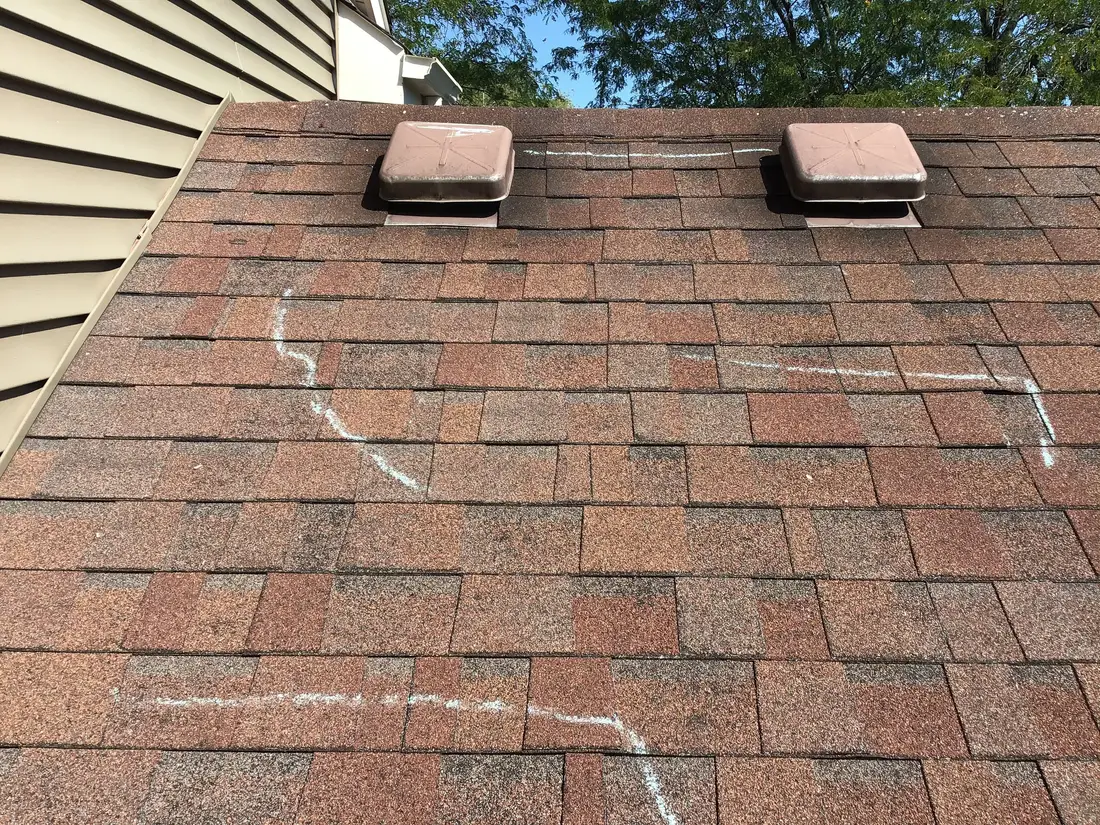
What hail and wind do to a roof
Hail knocks granules off the shingle and can crack the mat underneath. The spot looks like a dark bruise and feels soft when pressed. Wind lifts tabs, breaks the seal strip and can tear shingles off entirely. Both kinds of damage let water in later, often months after the storm.
Metal on the roof shows hail first: box vents, exhaust caps, flashing and gutters dent where shingles only bruise.
What the inspection covers
- Every slope of the roof, with hits marked in chalk and photographed.
- Vents, pipe boots, flashing and the ridge.
- Gutters, downspouts and siding on every side of the house.
- Measurements of each roof face, for the estimate.
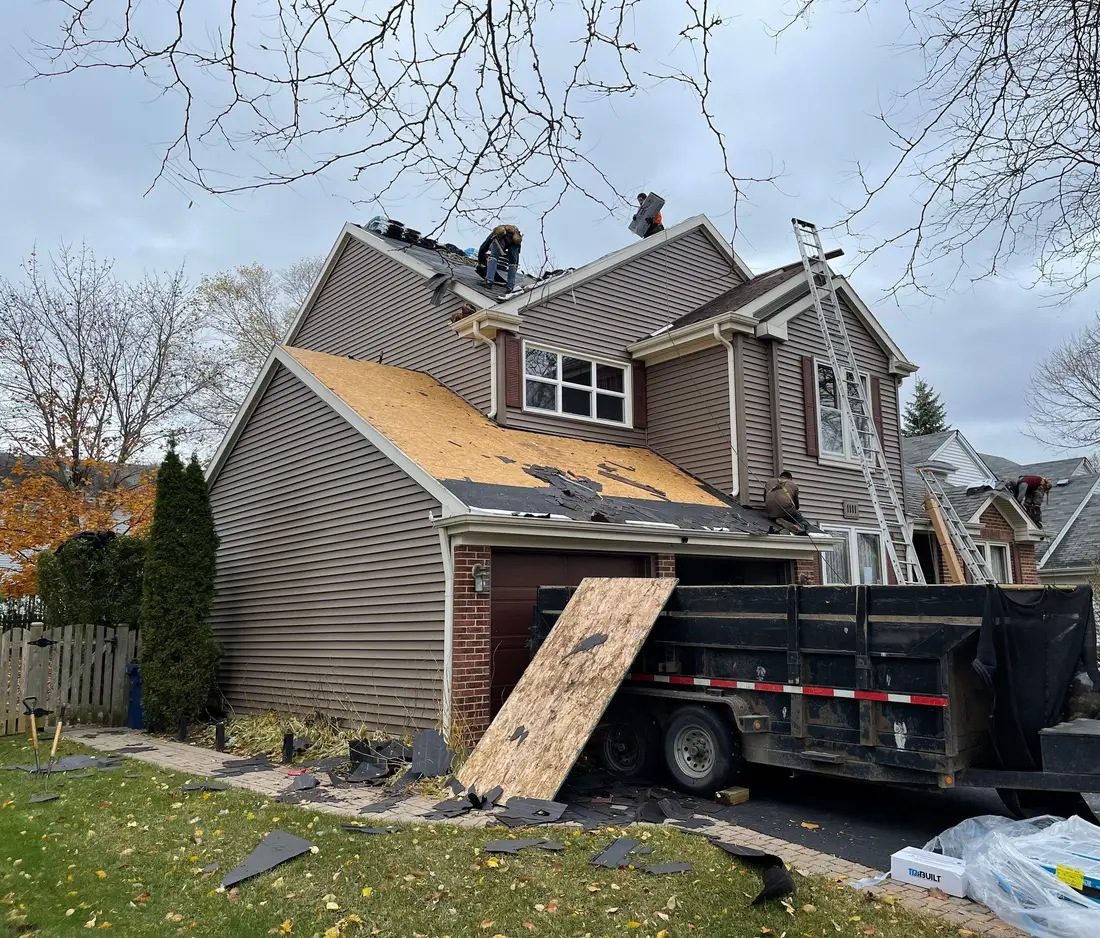
The estimate and your insurance
You receive the photos and a written replacement-cost estimate that lists the materials and code-required items, such as ice barrier and drip edge. You decide what to do with it.
We help with the roofing side of an insurance claim: photos, measurements, the construction estimate and answers to the adjuster on site. Under Illinois law the claim itself is negotiated by you or a licensed public adjuster.
Temporary protection
If the storm opened the roof, we can tarp it during business hours to keep water out until the repair or replacement is scheduled.
Questions about storm damage
How do I know if hail damaged my roof?
Check what you can see from the ground: dents in the gutters, downspouts and window screens, and chipped paint on wood trim. If those are marked, the shingles likely took hits too. Hail bruises on shingles are hard to see from the ground, so the inspection is done on the roof.
Should I go on the roof myself?
No. Wet or hail-covered shingles are slippery and damaged ones can break under your feet. Look from the ground and leave the roof to the inspection.
Will you talk to my insurance adjuster?
Yes. We can meet the adjuster on the roof and answer technical questions about the damage we documented and the work in our estimate. What the policy pays is settled between you and the insurance company, or through a licensed public adjuster if you hire one.